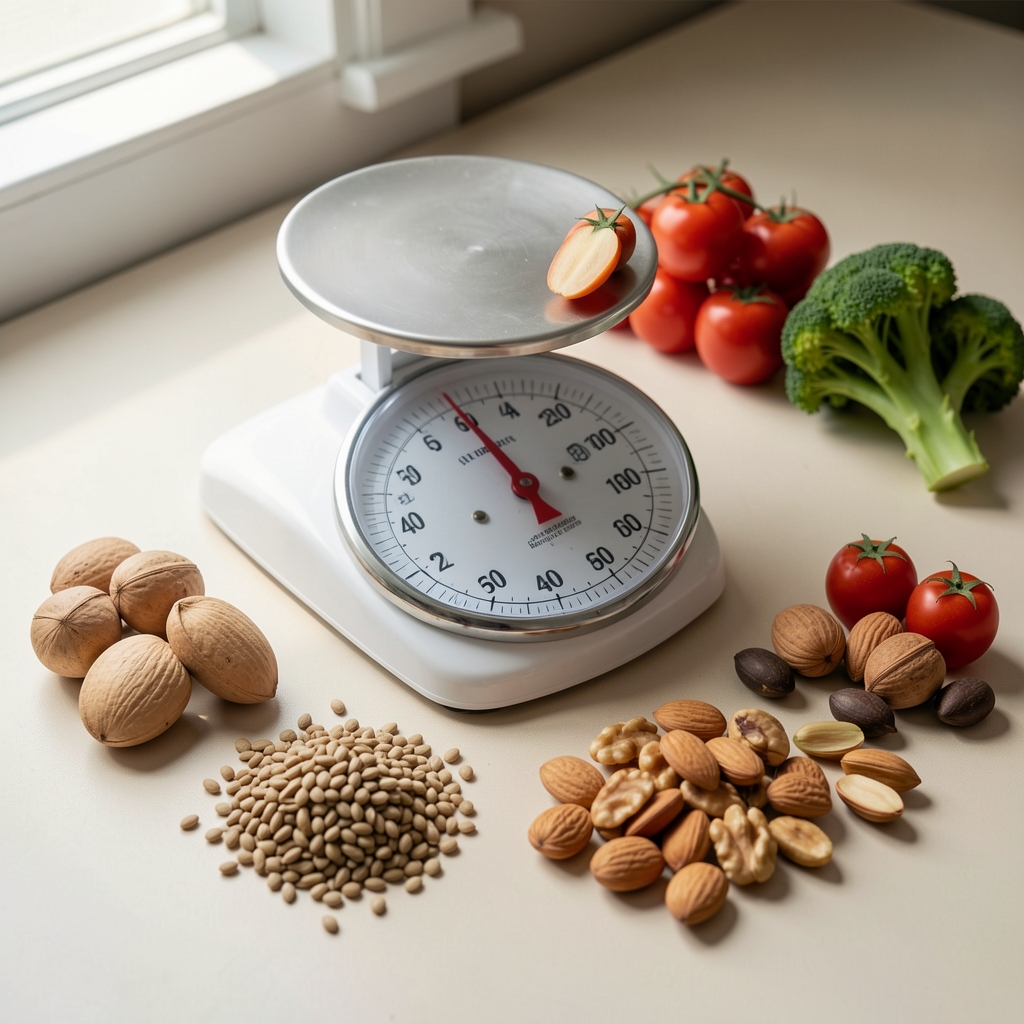
Of the variables that consistently predict resting metabolic rate across population studies, lean body mass stands apart. The relationship between muscle mass and metabolism is well-established in the published literature — skeletal muscle is metabolically active tissue, and its maintenance or loss over time has measurable consequences for the body's baseline energy demand. This article examines what the research says about protein intake as a supporting factor in that process, and how the daily energy equation is shaped by compositional choices.
Thermic Effect of Food (TEF): The energy expended in digesting, absorbing, and processing macronutrients. Protein carries the highest thermic cost of the three macronutrients, estimated at 20–30% of its caloric value.
Muscle Protein Synthesis (MPS): The process by which the body builds and repairs muscle tissue using dietary amino acids. Adequate protein intake is required to support this process and maintain lean mass over time.
Lean Body Mass as the Primary Driver of Resting Metabolic Rate
Skeletal muscle at rest consumes energy at a rate of approximately 13 kilocalories per kilogram per day — substantially more than adipose tissue, which consumes roughly 4 kilocalories per kilogram per day at rest. In a person with 50 kilograms of lean mass, the difference between those values across the full lean mass represents a substantial daily energy demand.
The connection between muscle mass and metabolism is, however, more nuanced than a simple kilocalorie-per-kilogram calculation suggests. Organ tissue — particularly the liver, brain, heart, and kidneys — accounts for the majority of resting metabolic rate in absolute terms, despite representing a smaller fraction of total body mass. Skeletal muscle's contribution to resting metabolic rate is proportionally less than its contribution to body weight, which is why the popular framing of muscle as a high-metabolic-rate tissue requires some qualification.
The practical relevance of lean mass to long-term metabolic health lies in two related observations. First, significant losses of lean mass — whether through ageing, inactivity, or severe energy restriction — produce structural reductions in resting metabolic rate that are difficult to reverse. Second, the maintenance of lean mass through consistent movement and adequate protein intake represents one of the most durable and evidence-supported levers for sustaining metabolic rate across the adult lifespan.
Protein and Metabolic Rate: The Thermic Advantage
Dietary protein influences resting metabolism through two distinct pathways: its role in supporting lean tissue maintenance, and its comparatively high thermic cost. The thermic effect of food — the energy expended in digesting, absorbing, and processing macronutrients — differs markedly between macronutrient classes. Carbohydrates carry a thermic cost of approximately 5 to 10 percent of their caloric value; fats roughly 0 to 3 percent; protein 20 to 30 percent.
A diet structured with adequate protein therefore contributes to the total daily energy expenditure picture through both structural and processing-related pathways. The thermic effect is not a trivial contribution: in an individual consuming 150 grams of protein per day, the thermic cost alone might represent 120 to 180 kilocalories of additional daily energy expenditure compared with an equivalent caloric intake dominated by fat or carbohydrate.
Whole food metabolism support from protein-rich sources also influences nutrient partitioning — the distribution of ingested energy between storage and immediate use. Research on nutrient partitioning consistently notes that higher protein intakes tend to favour the preservation of lean mass during periods of energy restriction, supporting muscle protein synthesis even when total energy intake is below maintenance.

FIG. 1 — Whole food protein composition reference. Ardek Compendium editorial notes, 2026.
Movement, Protein Timing, and the Muscle Protein Synthesis Response
The research on protein and metabolic rate consistently identifies distribution of protein intake across the day as relevant to muscle protein synthesis outcomes. Studies examining the anabolic response to protein feeding have found that relatively even distribution of protein intake across meals — rather than concentrating the majority in a single large serving — produces more sustained muscle protein synthesis stimulation over the course of a day.
The connection between movement and metabolic rate is reinforced by this finding. Resistance-based movement stimulates muscle protein synthesis, and protein intake in proximity to that movement — whether in the hours preceding or following it — appears to enhance the synthesis response. The combination of consistent resistance activity and distributed protein intake represents the evidence base for lean mass maintenance strategies in published nutritional research.
Morning metabolism and consistent eating rhythm are relevant to this picture. Research on meal timing and metabolism notes that the body's insulin sensitivity and protein processing efficiency follow a circadian pattern — earlier, more regular eating tends to align more closely with the periods of peak anabolic responsiveness. This does not imply that all protein must be consumed at a particular time, but that irregular, skipped-meal patterns may compromise the protein synthesis response relative to more consistent rhythms.
Metabolic Flexibility and Protein's Role in Fuel Partitioning
Metabolic flexibility — the body's capacity to shift between glucose and fatty acids as primary fuel sources depending on availability — is influenced by dietary protein through its effects on body composition. Individuals with higher lean mass tend to exhibit greater metabolic flexibility, a relationship that intersects with the insulin signalling pathways involved in fuel partitioning.
The practical significance of metabolic flexibility for long-term metabolic health relates to the body's capacity to manage varying patterns of food intake without triggering the pronounced adaptive responses described in research on adaptive thermogenesis. A more flexible metabolic system appears to tolerate variation in energy availability with less disruption to resting metabolic rate over time.
Calorie awareness and metabolism interact with protein intake in this context. Because protein's thermic effect and its contribution to lean mass maintenance both support metabolic rate, a diet with adequate whole food protein sources effectively shifts the energy balance equation in ways that lower-protein, equivalent-calorie diets do not — an observation documented across multiple independent study populations.
Age, Lean Mass Trajectory, and the Long View
The relationship between muscle mass and metabolism becomes more strategically important when considered against the backdrop of age-related lean mass change. Published research documents a consistent pattern of lean mass decline across adult life — a process accelerated by inactivity, inadequate protein intake, and periods of significant energy restriction. The compound effect of this decline on resting metabolic rate over decades is substantial.
Studies examining protein requirements across age groups have found that older adults may require higher absolute protein intakes to achieve equivalent muscle protein synthesis responses compared with younger adults. The anabolic response to protein feeding appears to diminish with age — a phenomenon termed anabolic resistance — which has led published recommendations for older populations to suggest protein intakes at the higher end of established ranges.
Long-term metabolic health in this framing is substantially a question of lean mass stewardship: the gradual, consistent effort to preserve metabolically active tissue through movement and adequate protein intake, across the full span of adult life rather than in short discrete periods. This is the sense in which whole food metabolism support and consistent eating rhythm contribute to metabolic balance — not through any single food or any single day, but through accumulated compositional and activity patterns over time.
Practical Framing: What the Research Supports
The convergence of evidence across the topics covered in this article supports several practical observations. Adequate protein intake — distributed across meals, derived from whole food sources where possible, and combined with consistent resistance-based movement — contributes to lean mass maintenance, which in turn sustains resting metabolic rate. The thermic advantage of protein adds a secondary metabolic contribution on top of the structural one.
Metabolic rate and weight are not simply determined by caloric arithmetic. The composition of the diet, particularly its protein content, influences how the body partitions energy between lean tissue synthesis and storage. Research consistently finds that higher-protein diets preserve lean mass more effectively during restriction and produce more favourable compositional outcomes over time.
Slow, consistent metabolic balance — rather than cycling between restriction and unrestricted eating — appears to best support the sustained muscle protein synthesis activity that preserves lean mass and maintains resting metabolic rate. The published evidence does not support any single short-term intervention as a reliable long-term strategy; it supports the accumulation of consistent, evidence-informed daily patterns over time.
- 01. Lean body mass is the most consistent predictor of resting metabolic rate between individuals of similar age and sex.
- 02. Protein carries a thermic cost of 20–30% of its caloric value, meaningfully above carbohydrate and fat.
- 03. Distributed protein intake across meals supports more sustained muscle protein synthesis than equivalent protein concentrated in single servings.
- 04. Anabolic resistance in older adults increases protein requirements to achieve equivalent lean mass maintenance outcomes.
- 05. Long-term metabolic health is substantially a question of accumulated lean mass stewardship through consistent movement and protein intake.